
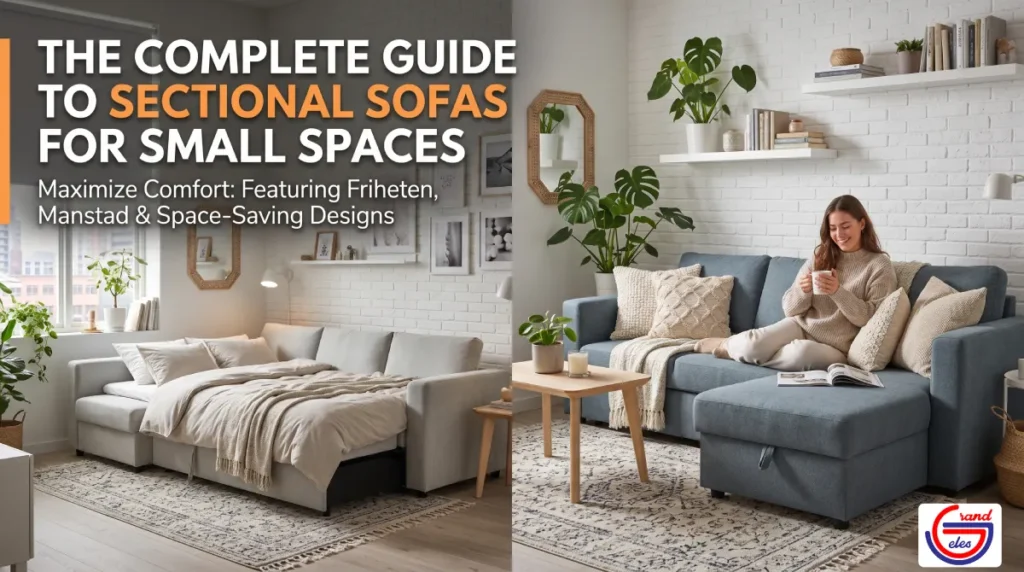
Choosing a sectional sofa for a small room is one of the trickiest furniture decisions you can make. Too large and the room feels suffocating. Too small and you lose the whole point of owning a sectional. This guide covers everything you need — dimensions, shapes, materials, and specific product recommendations — so you make the right choice the first time.
Before browsing a single product page, tape out the sofa’s footprint directly on your floor using painter’s tape. This step takes ten minutes and prevents expensive mistakes. Measure the room wall to wall, then identify every traffic path — you need at least 30 inches of clearance for comfortable movement. Also measure your doorways and hallways, because even flat-pack sectionals have large individual pieces that must navigate your entry points.
Upgrade to our premium sleeper sofas. The perfect 2-in-1 solution for a stylish living room and a cozy guest bed.

For rooms under 250 square feet, keep the longest sofa side between 90 and 110 inches. Beyond that, the piece starts dominating rather than serving the space.
| Dimension | Recommended Range |
|---|---|
| Total Width (longest side) | 90–110 inches |
| Total Depth (chaise or return) | 55–75 inches |
| Seat Depth | 20–22 inches |
| Minimum Clearance to Coffee Table | 16–18 inches |
| Minimum Clearance to Wall / TV | 30–36 inches |
An L-shaped sectional anchors a corner and works well in square or nearly square rooms. It offers the most seating but commits you to a fixed orientation. A reversible chaise sectional can be configured with the lounging section on either side, which matters enormously if you move apartments or want to try different layouts. For renters and anyone in asymmetrical rooms, the reversible chaise is almost always the smarter choice.
Modular designs let you start with two or three pieces and expand later. They adapt to new rooms and new needs without requiring a full replacement. The trade-off is cost — more pieces mean more hardware and a higher total price. For small spaces, a three-piece modular (corner unit plus two seats, or chaise plus corner plus one seat) usually hits the right balance between comfort and footprint.
Seat depth is the most underrated spec in sofa shopping. A depth of 20 to 22 inches works for most adults — feet stay on the floor, back stays supported. Anything deeper than 24 inches creates a lounging posture that’s comfortable for tall users but leaves shorter people without back support unless they’re fully reclined.
For cushion quality, ask retailers about foam density before purchasing. Seat cushions should be 1.8 PCF or higher; anything lower compresses within a year of daily use. Tight-back designs (no separate back cushions) look cleaner in small rooms and require no maintenance. Loose-back models feel cozier but the cushions shift constantly and need regular reshaping.
Match your seating to your lifestyle: if you mostly watch movies and lounge, prioritize depth and softer cushions. If you use the space for conversation or working from home, a shallower, firmer seat serves you far better.
Performance polyester and blended fabrics (Crypton, Sunbrella, Revolution) are the most practical choice for small spaces because the same two or three spots take constant wear. They resist staining, clean easily with a damp cloth, and hold color for years. Genuine leather is equally durable and easy to wipe down, but quality leather sectionals rarely start below $1,500. Faux leather looks appealing at entry-level prices but cracks and peels within three to five years — a poor long-term investment.
| Material | Durability | Stain Resistance | Pet-Friendly | Cleaning |
|---|---|---|---|---|
| Performance Polyester | Excellent | Excellent | Yes | Damp cloth |
| Microfiber | Good | Good | Moderate | Spot clean |
| Genuine Leather | Excellent | Good | Yes | Wipe down |
| Faux Leather (PU) | Poor (long-term) | Excellent | Yes | Wipe down |
| Velvet / Linen | Moderate | Poor | No | Difficult |
For households with pets or children, choose tight weaves, mid-to-dark colors, and fabrics with removable machine-washable covers. Velvet and linen are showroom materials — they rarely survive real family life past the first year.
A storage chaise is one of the most practical upgrades available in compact sectionals. The hollow base holds blankets, pillows, or anything you want accessible but hidden, replacing the need for a separate storage ottoman. A built-in sleeper eliminates the need for a guest bed entirely in studios or one-bedroom apartments — look for pull-out mattresses at least three inches thick, and plan to add a topper if guests will use it regularly. Slim arms (versus large cushioned arms) recover 8 to 12 inches of total footprint without reducing seating area.
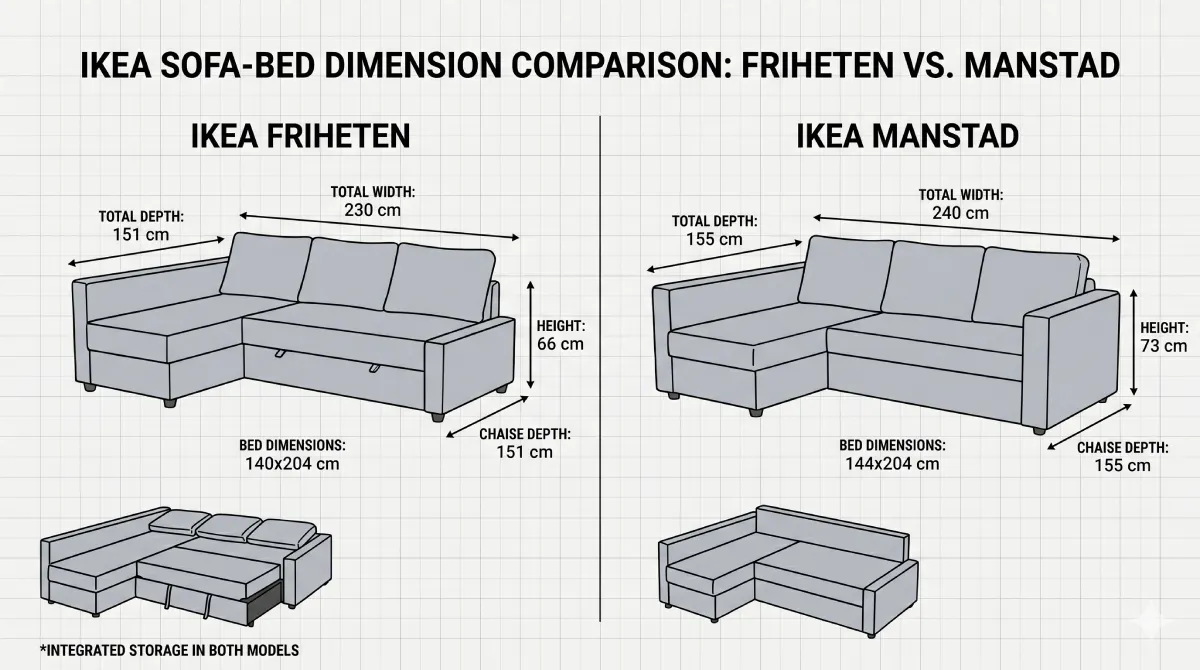
The FRIHETEN is approximately 90 inches wide by 55 inches deep and comes in left or right chaise configurations. It includes a storage chaise and a pull-out double bed — both included in the base price, which typically falls between $700 and $900. Covers are removable and machine washable. Assembly requires two people and roughly four hours. The pull-out mattress is functional for occasional guests but benefits from a topper for regular use. For renters and studio apartment dwellers, it offers more function per dollar than nearly any competitor in its price range.
The MANSTAD (now discontinued from active production but available secondhand) offers a larger footprint at roughly 102 by 64 inches, a reversible chaise, and a more generous storage compartment. If found in good secondhand condition at a fair price, it’s worth considering — particularly for anyone who hosts guests frequently and has slightly more floor space to work with than a true micro-apartment.
Entry-level sectionals ($400–$900) include flat-pack options like IKEA that are functional and repairable but expect a lifespan of five to seven years. Mid-range options ($900–$2,000) offer better foam density and sturdier frames. Upper mid-range ($2,000–$4,000) brings solid hardwood construction, performance fabric choices, and longer warranties. Premium pieces ($4,000+) are long-term investments with custom configurations and 10-plus year durability.
On delivery: always confirm whether in-home placement is included or costs extra, and ask specifically about staircase delivery if you’re above the ground floor. For assembly, flat-pack sectionals like the FRIHETEN need two people — plan the time rather than assuming it’s a solo afternoon project. Read return policies carefully before buying, and photograph your sofa within 48 hours of delivery.
Resist the instinct to push the sofa against the wall. A gap of two to four inches between the sofa back and the wall creates visual breathing room and makes the room feel more considered. Orient the open side of the L or the chaise toward the room’s focal point — a TV or a window — so the seating naturally faces the room rather than closing it off. Use a rug large enough that the front legs of the sectional sit on it; this anchors the seating zone and visually expands the surrounding floor space.
Buying slightly too large and assuming it will work is the single most common and most expensive mistake. Other frequent errors include choosing light upholstery in households with pets, skipping a rug entirely, adding accent chairs on top of a sectional in a space that doesn’t have room for both, and choosing a high-back sectional in a room with low ceilings — which compresses the vertical space noticeably.
| Feature | Sectional | Regular Sofa | Loveseat |
|---|---|---|---|
| Seating Capacity | 4–6 | 3 | 2 |
| Floor Space Required | Large | Medium | Small |
| Lounging Comfort | Excellent | Moderate | Limited |
| Sleeper / Storage Option | Yes (many models) | Some | Rare |
| Ideal Room Size | 150–300+ sq ft | 150–250 sq ft | Under 150 sq ft |
A sectional makes sense when you regularly seat three or more people, want a dedicated lounging zone, or need a sleeper sofa with storage built in. When you live alone, move frequently, or your room is under 120 square feet, a quality two-seat sofa or loveseat serves you better and leaves more usable floor space.
A sectional replaces multiple pieces of furniture — sofa, chaise, and often a guest bed — in a single footprint. It anchors a room visually, provides more seating per square foot than a sofa-plus-chairs setup, and in models like the FRIHETEN, adds storage that would otherwise require an extra piece of furniture.
Sectionals are difficult to move between apartments, lock you into a layout if the chaise isn’t reversible, and have a smaller secondhand market when it’s time to replace them. They can overwhelm a room if sizing is even slightly off, and the initial cost is higher than a standard sofa.
For renters, reversible and flat-pack configurations are essential. For families with pets or children, washable performance fabrics are non-negotiable. For frequent hosts in small apartments, a sleeper model with adequate mattress thickness is the most space-efficient solution available.
Confirm your room dimensions and traffic clearances, verify the largest sofa piece fits through your door and hallway, choose the correct chaise orientation before ordering, review foam density with the retailer, and read delivery and return terms fully before purchase.
For most people shopping under $1,000, the IKEA FRIHETEN remains the strongest choice — storage, sleeper, washable covers, and a reasonable footprint in one accessible package. Between $1,000 and $2,500, brands like Article and Joybird offer noticeably better foam density and frame quality. Above $2,500, the investment should include a manufacturer warranty of at least three to five years and an upgradeable cushion system.
A room should be at least 10×12 feet to accommodate a small sectional with comfortable clearance. Rooms under 120 square feet rarely leave enough space for traffic flow after placing a sectional.
After taping the footprint on your floor: if any walkway is narrower than 30 inches, or if less than 30% of the floor remains open, the sectional is too large for that space.
Yes. An L-shaped sectional works well in square rooms because it follows two walls and leaves the remaining floor open. Position the inner corner of the L into the room’s corner.
The FRIHETEN is comfortable for most users, with a seat depth of approximately 22 inches that suits lounging well. Users under 5’4″ may find the depth too generous for upright sitting. Cushions hold up for three to five years of daily use before showing significant wear.
Standing in front of the sofa and facing it: if the chaise is on your left, it’s a left-arm chaise (LAF). If it’s on your right, it’s a right-arm chaise (RAF). Sketch your room layout before ordering to confirm the correct orientation.
Yes, if you choose the right material. Performance polyester, Crypton fabric, and genuine leather are the most pet-friendly options. Avoid velvet and linen. Removable, machine-washable covers — available on IKEA models — make maintenance significantly easier.
Confirm whether in-home placement is included, how staircase delivery is handled, and what the return window is. For flat-pack furniture, doorstep delivery is standard — budget time and help for carrying boxes to your floor.
A sectional is not the right choice when your room is under 120 square feet, when you live alone and rarely host, when you move frequently and want to avoid disassembly, or when your layout has no viable wall or corner to anchor the piece.

 Grand Jeles Support
×
Grand Jeles Support
×